
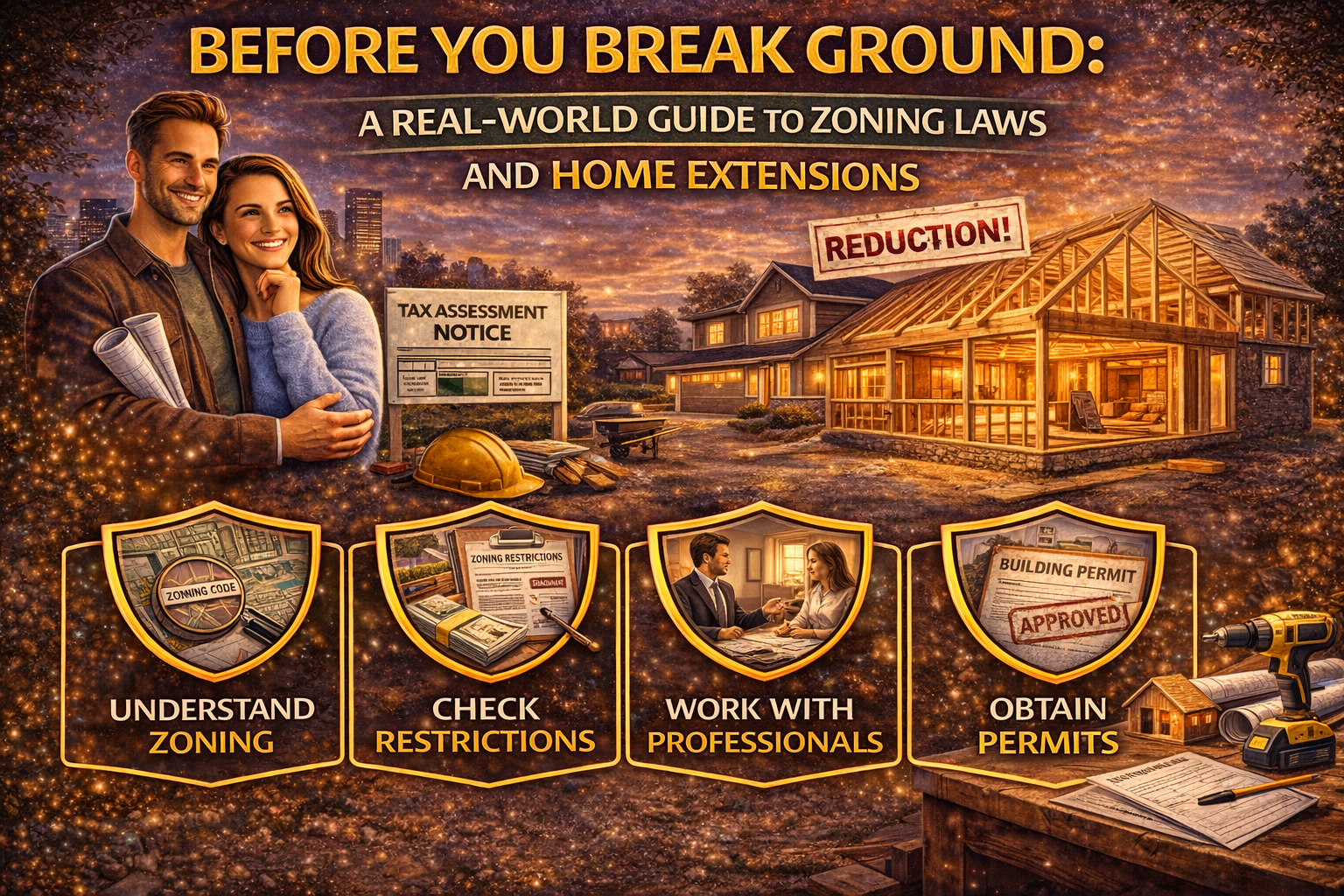
Planning a home addition? Don’t let your project get shut down. Learn how Zoning Laws impact setbacks, height limits, and your overall property value.
Table of Contents
I’ll never forget a call I got from a client a few years back. He was halfway through pouring the foundation for a stunning new sunroom when a city official showed up with a “Stop Work” order. It turns out, he had built three feet over his side-yard limit. That mistake didn’t just cause a headache; it cost him thousands in demolition fees and a mountain of legal paperwork.
Most homeowners think that because they own the land, they have a blank check to build whatever they want. But the reality of property ownership is that you are always operating within the constraints of local Zoning Laws. These regulations aren’t just there to be annoying; they are the invisible blueprint that keeps neighborhoods organized, safe, and predictable.
Whether you are dreaming of a second-story master suite or a simple “granny flat” in the backyard, your first stop shouldn’t be the lumber yard—it should be the local planning office. Navigating Zoning Laws can feel like learning a foreign language, but understanding them is the only way to protect your investment and ensure your home extension actually adds value to your property.
Why Do Zoning Laws Exist in the First Place?
It helps to think of these regulations as a community agreement. You wouldn’t want your neighbor opening a noisy industrial machine shop in their garage, and they probably don’t want your new two-story addition blocking their only source of natural light. Zoning Laws establish the “rules of the road” for land use.
In most residential areas, these rules focus on maintaining a specific aesthetic and density. They dictate how much of your lot you can cover with a structure and how far back from the street your front door must be. When you ignore Zoning Laws, you aren’t just risking a fine; you are creating a “title defect” that could make it impossible to sell your home down the road.
The Most Common Restrictions You’ll Encounter
When you start digging into the specifics of your property’s “zoning envelope,” you’ll quickly run into a few key terms. These are the pillars of most residential Zoning Laws, and they will dictate the size and shape of your extension.
- Setbacks: This is the minimum distance a structure must be from your property lines. You’ll have different requirements for the front, back, and sides of your lot.
- Floor Area Ratio (FAR): This measures the total square footage of your home against the size of your lot. It’s a way for cities to prevent “McMansions” from overwhelming small suburban lots.
- Height Restrictions: Even if you have the budget for a three-story addition, local Zoning Laws might cap residential buildings at 35 feet to preserve neighborhood views.
- Easements: These are “right-of-way” areas for utility companies. If there’s a sewer line running through your backyard, you can’t build an extension on top of it, regardless of your setbacks.
Navigating the Variance Process
What happens if your dream extension technically violates the current Zoning Laws? This is where things get interesting—and expensive. You can apply for a “variance,” which is essentially a legal exception to the rule.
To win a variance, you usually have to prove that the existing Zoning Laws create an “undue hardship” due to the unique shape or topography of your land. For example, if your lot is exceptionally narrow, you might get permission to build slightly closer to the side line. According to the National Association of Realtors (NAR), navigating these public hearings requires a lot of patience and, often, the support of your neighbors.
The Impact on Resale and Property Value
From a real estate perspective, an extension that follows all Zoning Laws is a massive asset. It increases your “living area” and can bump your home into a higher price bracket. However, unpermitted work is a seller’s worst nightmare.
During a home inspection or a title search, an appraiser will often check the city records. If they see a 500-square-foot addition that was built in violation of Zoning Laws, they won’t count that space toward your appraisal value. Worse, the buyer’s lender might refuse to fund the loan until the structure is brought into compliance—which could mean a total teardown.
For a deeper look at the historical development of land-use regulations, Wikipedia’s entry on Zoning offers a great overview of how these concepts evolved from simple nuisance laws into the complex systems we use today. Understanding the “why” behind Zoning Laws can make the “how” of following them a lot easier to swallow.
Building Codes vs. Zoning Laws: Don’t Confuse the Two
I see this mistake all the time. A homeowner gets a building permit and thinks they are in the clear. But building codes and Zoning Laws are two different animals. Building codes are about how you build (structural integrity, fire safety, electrical wiring). Zoning Laws are about where and what you build.
You can have a perfectly safe, code-compliant room that is still illegal because it violates the setbacks defined in your local Zoning Laws. You need to clear both hurdles before you hammer the first nail. This is why working with a local architect or a seasoned general contractor is so vital; they usually have a working relationship with the planning department and know the local “flavor” of the Zoning Laws in your specific neighborhood.
Accessory Dwelling Units (ADUs) and Changing Trends
In the last few years, we’ve seen a shift in how many cities handle Zoning Laws regarding “granny flats” or Accessory Dwelling Units. As the housing crisis intensifies, many municipalities are actually relaxing their Zoning Laws to allow for more density on single-family lots.
If you are looking at building an extension for a rental income stream, check if your city has recently updated its Zoning Laws for ADUs. In many West Coast markets, what was once illegal is now being actively encouraged. This can be a goldmine for investors, provided you follow the new, specific guidelines to the letter.
Environmental and Historic Preservation Overlays
If you live in a historic district or near a protected wetland, your Zoning Laws probably have an “overlay” that adds another layer of complexity. These overlays might dictate the materials you use for your extension—like requiring wood windows instead of vinyl—or force you to conduct an environmental impact study.
Ignoring an environmental overlay in your Zoning Laws can lead to massive federal or state fines. Always check if your property sits in a “special interest” zone. It might feel like a lot of red tape, but these specific Zoning Laws are what keep historic neighborhoods charming and environmentally sensitive areas protected for future generations.
FAQ Section
How do I find out the specific zoning for my property? Most cities have an online GIS map or a zoning portal. You can enter your address to see your specific designation (like R-1 for single-family residential). This will link you to the written Zoning Laws that define your setbacks and height limits.
Can I build an extension if my neighbor objects? If your extension follows all existing Zoning Laws, your neighbor generally cannot stop you. However, if you are applying for a variance or an exception, your neighbors will be notified and given a chance to speak at a public hearing. Keeping them in the loop early can prevent a “battle at the board.”
How much does a zoning permit cost? The fees vary wildly by city. A simple zoning review might cost a few hundred dollars, while a full variance application with public hearings can cost several thousand in filing fees and legal representation.
What happens if I already built an extension that violates zoning? You can apply for “retroactive” approval, but it’s a gamble. If the city denies it, they can force you to remove the structure. In some cases, you may be granted a “non-conforming use” status, but this often comes with restrictions on future repairs or sales.
Do zoning laws apply to sheds and fences? Yes. Even “temporary” structures are often governed by Zoning Laws. Most towns have a maximum height for fences and specific setbacks for sheds or detached garages. Always check before you buy that pre-fab shed from the big-box store.
Conclusion
At the end of the day, an extension is an investment in your lifestyle and your net worth. But that investment is only as strong as the permits backing it up. Taking the time to study your local Zoning Laws might not be as fun as picking out tile samples or floor plans, but it’s the most important step in the entire renovation process.
Do your homework, talk to the planning department, and make sure your vision fits within the legal “envelope” of your land. When you work with the Zoning Laws rather than trying to bypass them, you end up with a beautiful home addition that you can enjoy—and eventually sell—with total peace of mind.
