
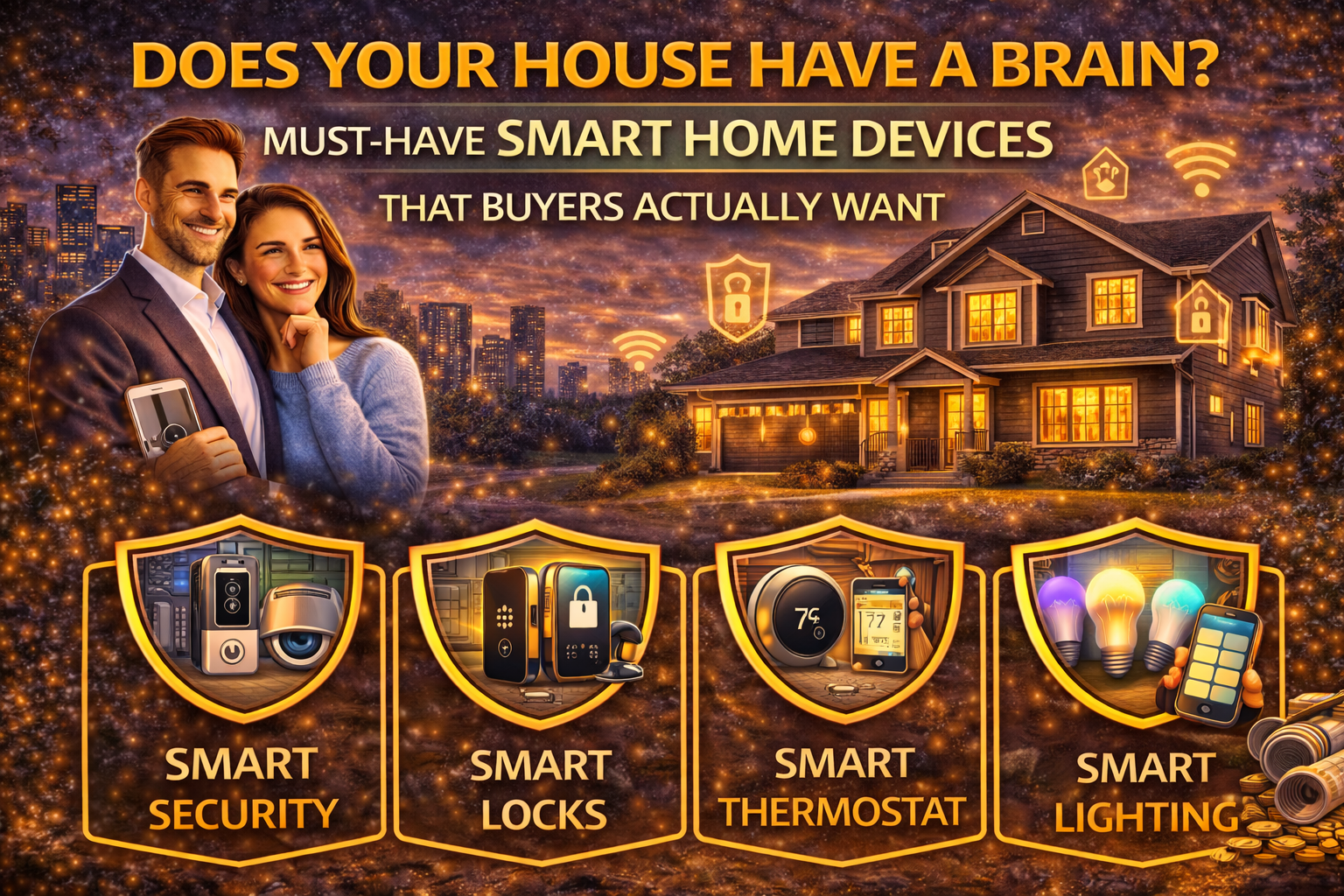
Planning to sell? Learn which Smart Home Devices actually increase property value and attract tech-savvy buyers in today’s competitive real estate market.
Table of Contents
I’ll never forget a showing I had last spring. I was walking a young couple through a beautifully staged colonial. They liked the kitchen and loved the backyard, but the moment they saw an old, yellowing dial thermostat on the wall, the mood shifted. “Oh,” the husband whispered, “I guess the systems are pretty dated here.”
It didn’t matter that the furnace was only two years old. In the eyes of a modern buyer, a lack of connectivity suggests a house hasn’t been maintained for the 21st century.
We’ve moved past the era where high-tech gadgets were just for “early adopters” or million-dollar tech mansions. Today, having the right Smart Home Devices is becoming as standard as having granite countertops or hardwood floors. But here is the rub: not all gadgets are created equal. You can spend thousands on “smart” refrigerators that tell jokes, but if it doesn’t solve a real problem for a buyer, it’s not going to help you at the closing table.
If you are a seller looking to stand out in a crowded market, you need to be strategic. You want technology that promises security, energy efficiency, and convenience. Let’s look at which Smart Home Devices are actually driving offer prices and which ones you can probably skip.
The “Big Three”: Security, Savings, and Simplicity
When a buyer walks into an open house, they are subconsciously looking for two things: peace of mind and lower future utility bills. The right Smart Home Devices act as a silent marketing team, reassuring the buyer that the home is protected and efficient.
1. Smart Thermostats: The Efficiency King
If you only install one piece of tech, make it a smart thermostat. Buyers love these because they represent immediate savings on heating and cooling costs. Seeing a sleek Nest or Ecobee on the wall tells a buyer, “This house won’t bleed your bank account in the summer.”
According to data from the National Association of Realtors (NAR), energy efficiency remains a top priority for home buyers across all age demographics. A smart thermostat is the most visible way to prove your home is modern.
2. Video Doorbells and Security Cameras
Porch piracy is a real concern for everyone these days. A video doorbell is often the very first of the Smart Home Devices a potential buyer sees. It creates an immediate sense of security before they even step through the front door. It says the neighborhood is safe, or at least, this house is well-defended.
3. Smart Locks and Keyless Entry
There is a distinct “cool factor” when a listing agent unlocks the front door with a phone or a keypad code rather than fumbling with a ring of jangling keys. It’s a small detail, but it sets a high-tech tone for the rest of the walkthrough.
Lighting and Ambiance: Setting the Stage
Lighting is the most underrated tool in a home seller’s arsenal. We’ve all been in that house with the dim, flickering yellow bulbs that make a perfectly good living room look like a dungeon. Integrating Smart Home Devices like dimmable LED switches or automated lighting scenes can transform a space.
Imagine a buyer walking into the master suite and the “evening” lighting scene is already active—soft, warm, and inviting. Smart lighting allows you to highlight the architectural features of your home, like tray ceilings or built-in bookshelves, with the tap of a button. It creates an emotional connection that “static” lighting simply can’t match.
Protecting the “Vitals”: Leak Detectors and Smart Shut-offs
If you want to impress an analytical buyer or a savvy real estate investor, show them your smart leak detectors. Water damage is the leading cause of insurance claims in residential real estate.
Small, inexpensive Smart Home Devices placed under sinks, near the water heater, or by the washing machine can save a homeowner tens of thousands of dollars in restoration costs. Even better, some systems include an automatic shut-off valve that kills the main water line the moment a leak is detected. For a deeper look at how these systems impact home safety and insurance, Wikipedia’s entry on Home Automation provides excellent context on the evolution of residential sensors.
The Importance of Ecosystem Compatibility
One mistake I see homeowners make is buying a “mish-mash” of different brands. You have one app for the lights, another for the cameras, and a third for the garage door. This is a nightmare for a new owner.
When you are installing Smart Home Devices, try to stick to a single ecosystem—whether that is Apple HomeKit, Amazon Alexa, or Google Home. A house that can be controlled from a single integrated dashboard is much more attractive than one that requires a thirty-minute tutorial on four different apps.
Why Buyers Value “Built-In” over “Add-On”
Buyers are generally willing to pay a premium for tech that is integrated into the home’s infrastructure. A smart light switch is more valuable than a smart light bulb. Why? Because the switch stays with the house and works with any bulb. When you market your home, emphasize that these Smart Home Devices are permanent fixtures that convey with the property.
Impact on Appraisals and Market Time
Do Smart Home Devices actually increase your appraisal value? The short answer is: not directly. Most appraisers look at comparable sales (comps) based on square footage, location, and overall condition.
However, tech-forward homes often sell faster and receive more multiple-offer situations. In a hot market, that competition is what drives the final sale price above the asking price. If two identical houses are on the same street, and one has a full suite of Smart Home Devices and the other doesn’t, the “smart” house is going to win the hearts (and wallets) of the millennial and Gen Z buyer pool every single time.
Don’t Over-Complicate: The “Frustration” Factor
A word of caution: technology should never make a house harder to live in. If a buyer can’t figure out how to turn on the kitchen lights because the system is too complex, you’ve lost them.
The best Smart Home Devices are those that provide “passive” benefits. They work in the background without requiring the user to be a computer scientist. Keep your interfaces simple. If you have a complex home theater or a high-end mesh Wi-Fi network, leave behind a clearly written “cheat sheet” for the new owners. It’s a small touch that shows you care about their experience.
FAQ Section
Will smart home devices help me sell my home faster? In many cases, yes. While they may not add $10,000 to your appraisal, they make your home more memorable and “move-in ready.” Buyers are often overwhelmed by the prospect of upgrading a home, so having these Smart Home Devices already installed is a huge psychological win.
Do I have to leave my smart home devices when I move? Legally, it depends on how they are attached. Generally, anything hard-wired (like a smart switch or a thermostat) is considered a “fixture” and must stay with the property unless explicitly excluded in the contract. Battery-powered cameras or plug-in speakers can usually go with you.
Which smart home devices offer the best return on investment? Smart thermostats and smart smoke/CO detectors offer the best ROI because they impact safety and monthly utility costs. These are the two things every buyer cares about, regardless of their tech-savviness.
Can I get a discount on my home insurance for having these devices? Many major insurance providers offer discounts for homes equipped with monitored security systems and smart leak detection. Mentioning this in your listing description can be a great selling point for budget-conscious buyers.
What is a “Smart Home Hub,” and do I need one? A hub is the “brain” that allows all your Smart Home Devices to talk to each other. While many newer devices connect directly to Wi-Fi, having a central hub (like an Apple TV or a dedicated Z-Wave hub) makes the system more stable and easier to manage for the next owner.
Conclusion
At the end of the day, real estate is about emotion. We use data to justify the price, but we buy because of how a house makes us feel. A home equipped with thoughtful Smart Home Devices feels modern, safe, and easy to manage.
You don’t need to turn your house into a spaceship to impress buyers. Focus on the basics: security at the front door, control over the temperature, and protection against water damage. These are the practical luxuries that people actually value. By investing in the right Smart Home Devices, you aren’t just selling a building; you are selling a smarter, better way of living.
