
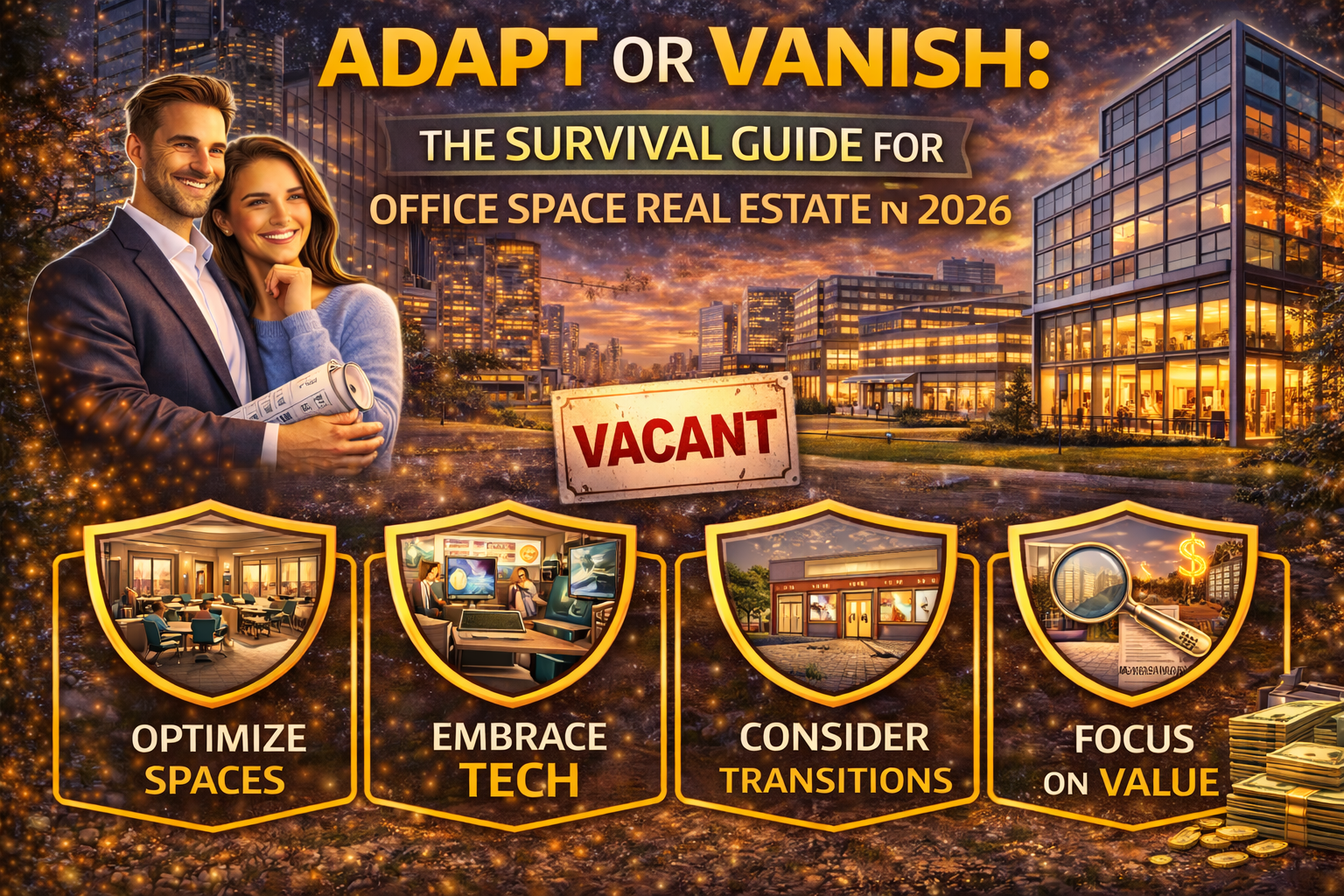
Is the corporate cubicle dead? Explore the shifting landscape of office space real estate as hybrid models and flexible workspaces redefine the modern workplace.
Table of Contents
I remember walking through downtown Chicago a few years back, looking up at the towering skyscrapers and thinking about how permanent it all felt. Thousands of people packed into elevators, grabbing expensive salads at noon, and sitting in cubicles until the sun went down. Back then, the market for office space real estate was as predictable as the seasons. If you built a shiny Class A building in a central business district, the tenants would come.
Fast forward to today, and that permanence has been replaced by a lot of empty lobby space and a massive amount of “for lease” signs. The rise of remote work didn’t just change where we work; it completely shattered the traditional blueprint of commercial property investment.
As a real estate strategist, I spend a lot of time talking to owners who are frankly terrified. They see the headlines about “zombie buildings” and wonder if they are holding onto a dinosaur. But here’s my take: office space real estate isn’t dying, but it is undergoing a painful, necessary evolution. We are moving away from the era of “mandatory presence” and into an era of “intentional gathering.” If a building doesn’t offer more than just a desk and a chair, it’s going to struggle to survive this decade.
The Flight to Quality: Class A vs. the Rest
One trend that has become crystal clear is the “flight to quality.” Companies might be downsizing their total square footage, but they are getting much choosier about the space they keep. They want the best of the best. In the current market, high-end office space real estate that features top-tier amenities—think rooftop gardens, high-end gyms, and air filtration systems that actually work—is still seeing decent demand.
The real trouble lies in the “middle class” of office buildings. Those beige, mid-rise structures built in the 80s and 90s are losing tenants at an alarming rate. Why would an employee commute forty minutes to sit in a bland room when they could work from their home office? To compete, landlords are having to get incredibly creative. According to the National Association of Realtors (NAR), the vacancy rates in secondary markets are forcing owners to reconsider their entire value proposition.
The Rise of the Flexible Lease and Coworking
Tenants today are allergic to the traditional ten-year lease. They don’t know where their company will be in three years, let alone a decade. This has forced the office space real estate sector to embrace flexibility. We are seeing a massive shift toward “plug-and-play” spaces where a startup can move in over a weekend and leave with thirty days’ notice.
Coworking isn’t just for freelancers anymore. Major corporations are now using flexible office space real estate as a “hub and spoke” model. They might keep a small headquarters in the city center but lease satellite offices in the suburbs to shorten the commute for their teams. It’s about meeting the employees where they are, rather than forcing the employees to come to the building.
Adaptive Reuse: Can We Turn Offices Into Apartments?
This is the billion-dollar question everyone is asking. If we have too much office space real estate and not enough housing, why don’t we just convert them? In theory, it sounds like a perfect solution. In practice, it’s a logistical nightmare.
Most office buildings have massive floor plates. This means the center of the building is far away from any windows. In a residential setting, people generally like having windows in their bedrooms. Plumbing is another hurdle; an office building is designed for two large bathrooms per floor, not twenty individual ones. However, in cities with extreme housing shortages, we are seeing some successful conversions of older office space real estate that have smaller, more residential-friendly footprints. For a look at how urban planning is adapting to these shifts, Wikipedia’s entry on Adaptive Reuse offers some fascinating historical context on how cities have survived similar transitions in the past.
Technology and the “Smart” Office
The buildings that are winning right now are the ones that feel like they belong in 2026. A modern office space real estate asset needs to be a “smart” building. This means touchless entry, app-based desk booking, and high-speed fiber that actually holds up during a 50-person video call.
Sustainability has also moved from a “nice to have” to a “must-have.” Institutional investors are increasingly looking for ESG (Environmental, Social, and Governance) compliance. If your office space real estate isn’t LEED certified or focused on energy efficiency, you are cutting out a huge portion of the potential buyer pool. Tenants want to tell their shareholders that they are working in a green building.
The Human Element: Creating a Destination
If you want people to leave their homes, you have to offer something they can’t get at their kitchen table. The most successful office space real estate projects right now look more like hospitality venues than workplaces. They are surrounded by great coffee shops, walkable parks, and vibrant retail districts.
I recently spoke with a developer who spent $5 million just on the “lobby experience” of his new office space real estate project. He put in a high-end cocktail bar and a library-style quiet zone. He realized that the office is now a social destination. It’s a place for mentorship, collaboration, and building company culture. You can do tasks at home, but you build a career in the office.
Market Cycles and the “Big Reset”
We are currently in the middle of a major valuation reset. Interest rates have made it harder to refinance debt, and lower occupancy rates have lowered the appraised value of many office space real estate assets. This is creating a lot of pain for current owners, but it’s also creating an incredible opportunity for new investors with cash on hand.
We are seeing “distressed sales” where buildings are trading for 40% or 50% of what they were worth five years ago. This lower “basis” allows the new owners to spend money on renovations and offer more competitive rents. This cycle of destruction and renewal is a natural part of the property market, even if it feels chaotic while we are living through it.
The Suburbs are Seeing a Surprising Comeback
While the glitzy downtown towers are struggling, certain suburban office space real estate pockets are actually thriving. Small, well-located offices near high-end residential neighborhoods are becoming very attractive.
Parents who are tired of working from a cluttered dining room table but don’t want to spend two hours on a train are looking for “third spaces.” A local, high-quality piece of office space real estate that offers a professional environment and a five-minute drive from home is a very easy sell in 2026. This decentralization of the workplace is one of the most significant shifts we’ve seen in our lifetimes.
FAQ Section
Is the office market going to crash? It’s not so much a crash as a massive divergence. High-quality, modern office space real estate will continue to hold value, while older, poorly located buildings may see significant devaluations or require complete repurposing.
How do I invest in office space right now? For most individual investors, the best way to gain exposure to office space real estate is through REITs (Real Estate Investment Trusts) that specialize in medical offices or life sciences, as these sectors require physical presence and have remained much more stable than general corporate space.
What is a “Flight to Quality”? This refers to the trend of tenants moving out of older, lower-tier buildings and into premium office space real estate that offers better amenities, technology, and locations, even if they have to take less total square footage to afford it.
Can every office building be converted to apartments? Unfortunately, no. Many modern office space real estate structures have floor plans that are too deep or mechanical systems that are too centralized to make residential conversion financially or architecturally feasible without massive subsidies.
What amenities are most in demand for office tenants today? Tenants are looking for flexible meeting spaces, high-end fitness centers, outdoor access, and “concierge” services. Essentially, anything that makes the commute feel worthwhile and supports employee wellness and collaboration.
Conclusion
The future of office space real estate isn’t a return to 2019, and it isn’t a total disappearance of the corporate headquarters. It’s a hybrid middle ground. The buildings that will thrive are those that adapt to the new reality: that the office is now a tool for connection, not a container for workers.
Investors and landlords who are willing to embrace flexibility, invest in technology, and treat their tenants like guests in a hotel will find that there is still a massive amount of value to be found. The cubicle might be dead, but the workplace is just getting started.
