
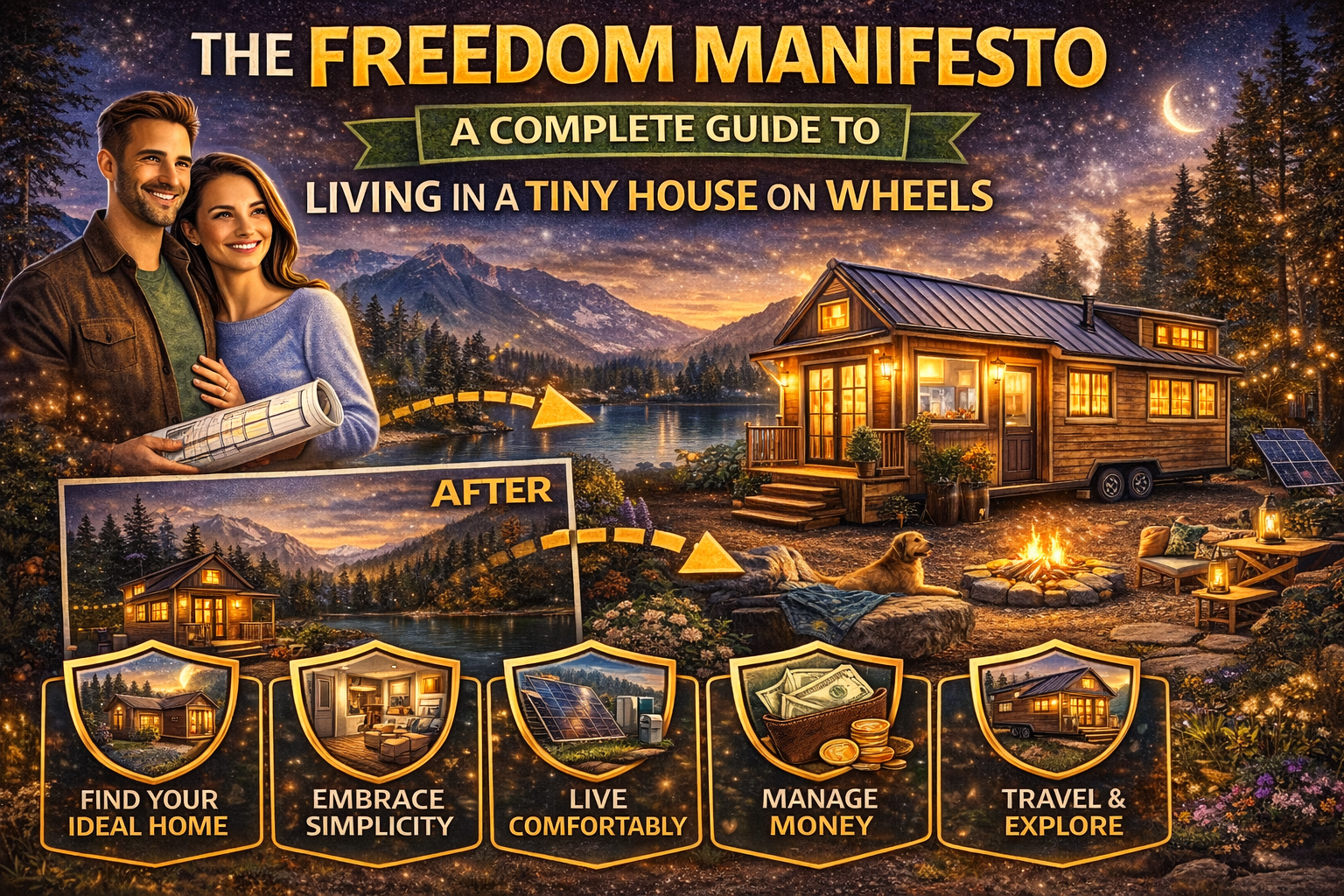
Ready to downsize? Discover everything you need to know about a Tiny House on Wheels, from legal parking and off-grid setups to costs and design tips.
Table of Contents
Choosing a tiny house on wheels isn’t just about downsizing your square footage; it’s about upscaling your freedom. Whether you’re a digital nomad looking for a mobile basecamp or someone tired of the traditional housing market grind, the idea of a portable, custom-built sanctuary is incredibly seductive. But let’s be real: it’s not all sunset views and minimalist aesthetics. There are gritty logistics, legal hurdles, and the very real challenge of living in less than 300 square feet.
In this guide, we’re going to look past the filtered Instagram photos. We’ll dig into the reality of the tiny house on wheels lifestyle—from finding a place to park to managing your gray water. If you’ve been dreaming of a life with less debt and more adventure, you’re in the right place.
Why Mobility Changes the Real Estate Game
The defining feature of a tiny house on wheels is, obviously, the wheels. In the eyes of the law, this often categorizes the structure as a recreational vehicle rather than a permanent residential sale. This distinction is a double-edged sword. On one hand, you aren’t tied to a specific zip code. If your job moves or you simply get tired of the scenery, you hitch up and go.
On the other hand, traditional mortgage lenders usually won’t touch a home on a trailer. Most buyers have to look at personal loans, RV loans, or good old-fashioned cash. This makes the “buy-in” process different from a standard home purchase. However, the significantly lower price point means many people can own their tiny house on wheels outright within a few years, completely bypassing the 30-year mortgage trap.
Designing for Maximum Efficiency
When every inch counts, your floor plan is everything. You can’t afford “dead space” in a tiny house on wheels. Every stairs should be a drawer; every table should fold against the wall. I’ve seen some incredible designs that make 250 square feet feel like a palace through the use of high ceilings and strategic window placement.
- Loft vs. Ground Floor: Lofts are classic, but climbing a ladder at 3 AM isn’t for everyone.
- Multi-functional Furniture: A couch that turns into a dining nook is a staple of the tiny house on wheels.
- Storage Hacks: Look for “toe-kick” drawers and over-the-door solutions.
Link to Wikipedia: Tiny House Movement
The Legality of Parking Your Tiny House on Wheels
This is the part that keeps most prospective owners up at night. Where do you actually put the thing? Zoning laws are slowly catching up, but many cities still view a tiny house on wheels as a “temporary” structure. You can’t always just park in a friend’s backyard and call it a day.
Many owners find success in “tiny house villages” or RV parks that have long-term slots. Others negotiate with rural landowners for a “land lease” arrangement. If you’re planning to buy land specifically for your tiny house on wheels, you must check the local property listings and zoning codes first. Some counties require a minimum square footage for a primary residence, which might disqualify your tiny home unless it’s placed on a permanent foundation.
Off-Grid vs. On-Grid Logistics
Are you looking for a tiny house on wheels that plugs into a city sewer line, or are you going full “mountain man”?
- Solar Power: Great for freedom, but requires a significant upfront investment in batteries and panels.
- Composting Toilets: A polarizing topic, but essential for a truly mobile tiny house on wheels.
- Water Tanks: Managing your fresh and gray water becomes a weekly chore if you aren’t hooked up to a hose.
Link to National Association of Realtors: Alternative Housing Trends
Managing the “Clutter” Mentality
You cannot be a hoarder and live in a tiny house on wheels. It just doesn’t work. The physical transition requires a mental shift. You start valuing quality over quantity. Instead of ten cheap frying pans, you have one high-end cast iron skillet.
This decluttering process is often the most therapeutic part of moving into a tiny house on wheels. You’re forced to confront your relationship with “stuff.” If an item doesn’t have a clear purpose or bring you immense joy, it doesn’t get a spot on the trailer. It’s a ruthless process, but the lightness you feel afterward is worth the effort.
The Cost of Maintenance and Towing
Don’t forget that a tiny house on wheels is, essentially, a house that experiences a minor earthquake every time it hits the highway. Vibrations can loosen plumbing joints and shift cabinets. You need to be handy with a toolkit or have a budget set aside for regular maintenance.
Furthermore, you need a serious truck. A standard SUV isn’t going to pull a 14,000-pound tiny house on wheels safely. If you don’t want to own a heavy-duty truck, you’ll need to budget for professional towing services every time you want to move. This is one of those hidden costs of buying a home that people often overlook until they’re ready to hit the road.
Is a Tiny House on Wheels a Good Investment?
From a purely financial standpoint, a tiny house on wheels depreciates more like a vehicle than a piece of real estate. You aren’t buying land, which is where the real appreciation happens in the housing market.
However, the “return” is found in the savings. If you save $1,500 a month in rent or mortgage payments by living in your tiny house on wheels, that’s $18,000 a year back in your pocket. For many, that “lifestyle dividend” is far more valuable than the speculative equity of a suburban home. It’s a different way of looking at a real estate investment—one that prioritizes current cash flow over future sales.
Building vs. Buying Ready-Made
Do you have the skills to swing a hammer, or do you want a turnkey solution? Building your own tiny house on wheels can save you 50% on costs, but it will likely take you a year of weekends and a lot of frustration.
Buying from a professional builder ensures the home is built to RVIA standards, which makes getting insurance for your tiny house on wheels much easier. Many insurance companies are hesitant to cover DIY builds because of the risks associated with amateur electrical and gas lines. If you go the DIY route, document every step of the process for your future agent.
Conclusion
Living in a tiny house on wheels is a radical act of simplification. It’s about stripping away the excess to find out what you actually need to be happy. It’s certainly not for everyone—if you love a sprawling basement and a four-car garage, you’ll probably feel claustrophobic within a week.
But if you value experiences over square footage, a tiny house on wheels offers a path to a life that few people ever get to experience. It’s a life of flexibility, financial ease, and the ability to wake up with a different view whenever you feel like it. The world is a big place; why stay in just one corner of it?
Are you ready to simplify your life? What’s the one item you could never give up if you moved into a tiny home? Drop a comment below and let’s talk about the small life!
FAQ Section
1. Is it legal to live in a tiny house on wheels full-time? It depends entirely on your local zoning laws. Some cities are very progressive and allow a tiny house on wheels as an Accessory Dwelling Unit (ADU). Others treat them like RVs and limit your stay to 30 days. Always check with the local planning department before you park.
2. How much does a typical tiny house on wheels cost? A professionally built tiny house on wheels usually ranges from $60,000 to $120,000. If you build it yourself, you might be able to get it done for $30,000 to $45,000, depending on the materials you use and how much “sweat equity” you put in.
3. How do you handle heat and air conditioning? Most owners use a mini-split heat pump. It’s a small, incredibly efficient unit that handles both heating and cooling. Since a tiny house on wheels has such a small interior volume, these units can change the temperature in just a few minutes.
4. Can you get a 30-year mortgage for a tiny house on wheels? Usually, no. Because the home is on a trailer, it is not considered “real property.” You will likely need an RV loan (usually 10-15 years) or a personal loan. Some specialized tiny house lenders are starting to offer longer terms, but they are still rare in the current housing market.
5. What happens to the tiny house on wheels in extreme weather? You have to be proactive. In freezing temperatures, you need heated water hoses to prevent pipes from bursting. In high winds, a tiny house on wheels should be properly skirted and anchored to the ground. It’s a different kind of “house maintenance” than a traditional home, but it’s manageable with a little prep.
