
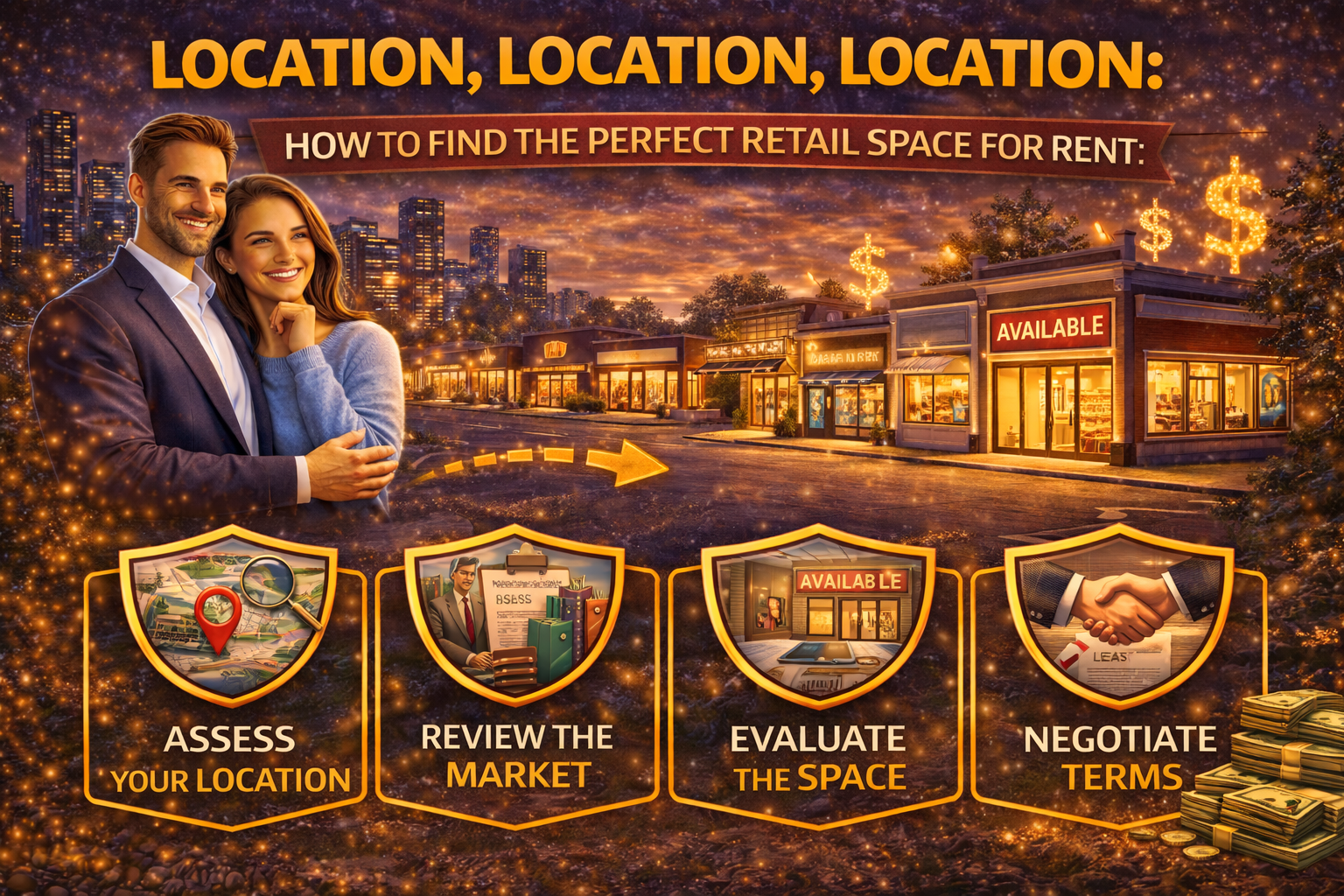
Don’t settle for the wrong storefront. Learn how to find the ideal retail space for rent, negotiate your lease, and position your business for long-term success.
Table of Contents
I’ll never forget the first time I helped a client look for a storefront. She was opening a high-end boutique and had her heart set on this charming, ivy-covered building on a quiet side street. It looked like something out of a movie. But when we stood on the sidewalk for twenty minutes on a Tuesday morning and saw exactly zero pedestrians walk by, the reality set in. Charm doesn’t pay the bills; foot traffic does.
Choosing the right retail space for rent is easily the most high-stakes decision you’ll make for your business. It is the physical manifestation of your brand. If you pick a spot with poor visibility or a landlord who refuses to fix the AC, you are starting the race with a lead weight tied to your ankle.
In my years as a real estate consultant, I’ve seen businesses thrive in “okay” spots because of great management, but I’ve also seen brilliant concepts die because they chose a retail space for rent in a dying shopping center. You have to be cold-blooded about the numbers while still trusting your gut about the “vibe” of a neighborhood. Let’s dive into how you can navigate the hunt without losing your mind.
Defining Your “Must-Haves” Before the Hunt
Before you start scrolling through listings, you need to be brutally honest about what your business actually needs. A high-end jeweler needs a very different retail space for rent than a fast-casual taco shop.
Think about your “power neighbors.” These are the businesses that attract your ideal customer. If you’re opening a yoga studio, finding a retail space for rent next to a healthy juice bar or a high-end grocery store is like getting free marketing every single day.
- Square Footage: Do you need a massive backroom for inventory, or is every inch dedicated to the showroom?
- Ceiling Height: High ceilings create a luxury feel, but they also drive up your heating and cooling costs.
- Loading Zones: If you’re receiving large pallet shipments, a “pretty” storefront with no alley access is going to be a nightmare.
Understanding the Neighborhood Vibe and Demographics
I always tell my clients to visit a potential retail space for rent at three different times: Tuesday morning, Thursday evening, and Saturday afternoon. The energy changes. A spot that feels bustling during the weekday lunch rush might turn into a ghost town the moment the office workers go home.
You also need to look at the “anchors.” According to the National Association of Realtors (NAR), retail success is often tied to the health of nearby major draws like big-box retailers or popular local landmarks. If the big grocery store across the street is closing down, that retail space for rent you’re looking at might lose 40% of its spontaneous foot traffic overnight.
Decoding the Lease: It’s More Than Just Rent
In the world of commercial real estate, the price you see on the flyer is rarely the price you actually pay. Most retail space for rent listings use a “Triple Net” (NNN) structure. This means you pay the base rent plus your share of property taxes, insurance, and common area maintenance (CAM).
If you aren’t careful, those NNN charges can fluctuate and eat your profit margins. I always recommend asking for the last three years of NNN history before signing. If the property taxes in that district are skyrocketing, you need to know that before you commit to a five-year lease.
Negotiating the “Tenant Improvement” Allowance
One of the best ways to save capital is to negotiate a Tenant Improvement (TI) allowance. This is essentially a credit from the landlord to help you build out the retail space for rent. Since you’re likely going to need new flooring, lighting, or shelving to make the space your own, a healthy TI allowance can be the difference between a successful launch and starting out in debt.
Visibility and Signage: Don’t Be Invisible
You could have the best product in the world, but if people can’t see your sign from the road, you’re in trouble. When looking at a retail space for rent, check the “signage rights.” Some landlords are incredibly strict about the size, color, and placement of your brand’s logo.
Check the “sightlines” as well. Is there a giant oak tree blocking the view of the retail space for rent from the main intersection? Does the parking lot layout make it difficult for people to turn in? These small physical hurdles create “friction” for your customers, and in retail, friction is the enemy of sales.
The Importance of Parking and Accessibility
We’ve all been there—you want to visit a store, but the parking lot is a cramped, pothole-filled mess, so you just keep driving. Accessibility is a huge factor when choosing a retail space for rent.
If you’re targeting a suburban demographic, you need ample, easy-to-navigate parking. If you’re in a dense urban core, you need to be within a five-minute walk of public transit. For more on the urban planning side of commercial zones, Wikipedia’s entry on Retail Districts offers some great context on how “clustering” works and why being near competitors can actually be a good thing.
Evaluating the Landlord and Property Management
You aren’t just renting a building; you’re entering a multi-year relationship. A bad landlord can make your life miserable. When you’re touring a retail space for rent, try to pop into the neighboring shops. Ask the owners: “How fast does the landlord respond to a roof leak?” or “Are the CAM charges fair?”
A landlord who invests in the property—keeping the parking lot paved and the landscaping fresh—is helping your business succeed. A landlord who lets the building look “shabby” is actively hurting your brand’s perceived value.
Zoning and Legal “Red Tape”
Don’t assume that because a space was a clothing store, it can easily become a bakery. Each retail space for rent is governed by specific municipal zoning laws. Converting a “dry” retail spot into a “wet” use (like a restaurant or salon) requires massive plumbing upgrades and specific permits.
Check with the city’s planning department before you sign. I’ve seen people get stuck with a retail space for rent they couldn’t actually use for their intended purpose because the grease trap requirements were physically impossible to meet in that specific building.
FAQ Section
How long are retail leases typically? Most commercial landlords prefer a 3-to-5-year initial term. While you might be tempted to ask for a shorter lease to “test the waters,” many landlords won’t offer a Tenant Improvement allowance for anything less than a 5-year commitment.
What is the difference between “Usable” and “Rentable” square feet? “Usable” is the actual space within your four walls. “Rentable” includes your share of common areas like lobbies, hallways, and public restrooms. When you look at a retail space for rent, you are almost always paying for the rentable square footage.
Should I hire a tenant representative? Yes! A tenant rep is a broker who works specifically for you, not the landlord. In most cases, their commission is paid by the landlord, so you get expert negotiation and market data for free. They can help you find a retail space for rent that hasn’t even hit the public market yet.
What are “Exclusive Use” clauses? This is a vital part of your lease negotiation. An exclusive use clause prevents the landlord from renting another retail space for rent in the same center to a direct competitor. If you’re opening a pizza shop, you don’t want a Domino’s opening up two doors down next year.
Is a personal guarantee always required? For most new businesses, yes. The landlord wants to ensure that if the business fails, you are still personally responsible for the remaining rent. As your business grows and establishes a strong credit history, you can often negotiate the removal of the personal guarantee on your next retail space for rent.
Conclusion
Finding the right retail space for rent is a marathon, not a sprint. It takes patience to look past the “charming” aesthetics and focus on the cold, hard data of foot traffic, NNN costs, and zoning restrictions.
Remember, your location is a tool. It should work as hard as you do to attract customers and drive revenue. If a space doesn’t feel right, or if the lease terms seem predatory, don’t be afraid to walk away. The perfect retail space for rent is out there; you just have to be diligent enough to find it.
